Zexi Xing | 邢泽曦

Zexi Xing | 邢泽曦

Postdoctoral Fellow @ astronomy

Auburn University

Hi!

I am a postdoctoral fellow in the Department of Physics at Auburn University. My research uses ultraviolet observations to study comets, asteroids, and interstellar objects, with a focus on cometary water activity and volatile evolution. I work often with space observatories, especially the Neil Gehrels Swift Observatory. I received my Ph.D. in Astronomy from the University of Hong Kong in 2023 and my B.Sc. in Astronomy from Nanjing University in 2018. I am honored to have minor planet (34712) Zexixing named after me. My home is in Bazhou city, Hebei province in Mainland China.

In addition to research, I have broad interests. I enjoy collecting from nature, photography, and sketching. The big world fascinates me.

  • My Chinese name is 邢泽曦 (Xing Ze-Xi), where '邢' (Xing) is my family name; '泽' (Ze) is my generation name, meaning water and grace; I was born at 6am, thus I was given '曦' (Xi), which means the Sun in the early morning. It is a little hard to pronounce, and feel easy to call me Lucy!

Work Experience

  • Postdoctoral Fellow, Apr. 2024 - Present

    Auburn University

Education

  • Ph.D. in Astronomy, 2018 - 2023

    The University of Hong Kong

  • B.Sc. in Astronomy, 2014 - 2018

    Nanjing University
Research interests

Cometary water and volatile evolution

How do comets release their ices, and what changes as they approach the Sun? I use ultraviolet observations with Swift/UVOT to trace water through OH emission, produced when sunlight breaks apart water molecules. By following water production over time and comparing it with other gases and dust, I study what drives cometary activity, how outbursts alter the coma, and how erosion exposes fresh material. These observations help connect the behavior we see today with the volatile history of a comet.

Interstellar comets

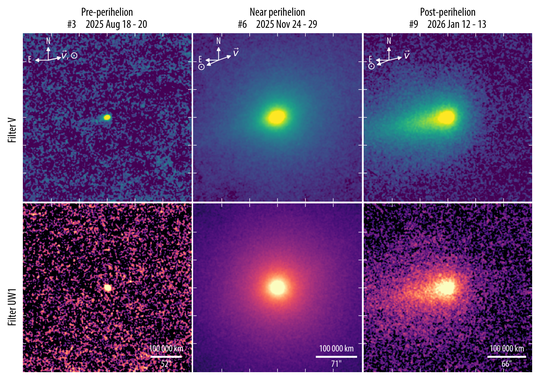
Interstellar comets carry material from other planetary systems into our own. My work on 2I/Borisov and 3I/ATLAS uses ultraviolet observations to measure how much water they release and how that activity changes during their passage around the Sun. Comparing water with other volatile species helps distinguish changes driven by solar heating from differences in composition. Through these rare visitors, I explore which aspects of cometary activity are shared across planetary systems and which reflect a different history.

UV small-body observing toolkits

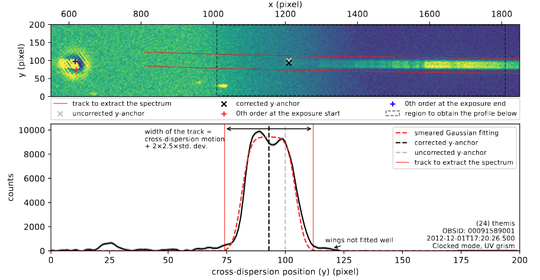
Comets and asteroids move across the sky, and a comet’s diffuse coma does not behave like a point source. I develop observing strategies, calibration corrections, and reduction methods that adapt Swift/UVOT to these targets, from separating faint cometary emission from background stars to extracting ultraviolet spectra blurred by motion. The aim is to turn challenging observations into reliable measurements of gas activity and asteroid reflectance.

I share these methods through uvotimgpy, a Python toolkit for small-body imaging and analysis, and UVOTPY-for-smallbody, extensions to UVOTPY for extracting grism spectra of moving targets and extended comae.

Recent Publications

Welcome to browse my Google Scholar profile, my ORCID profile, and/or my ADS Library.

Water Production Rates of the Interstellar Object 3I/ATLAS

[2025] Early ultraviolet OH measurements of 3I/ATLAS, including water activity at 2.9 au.

Pre-perihelion radio observations of comet 12P/Pons-Brooks with the Tianma Radio Telescope

[2025] Radio observations of comet 12P/Pons-Brooks before perihelion.

Neil Gehrels-Swift Observatory's Ultraviolet/Optical Telescope Observations of Small Bodies in the Solar System

[2023] A review of Swift/UVOT observations of small bodies in the Solar System and the techniques behind them.

Variable X-Ray Emission of Comet 46P/Wirtanen

[2021-11-10]

Water production rates and activity of interstellar comet 2I/Borisov

[2020-04-27] We made first unambiguous detection of OH lines for 2I/Borisov, and successfully measured its water production rates, which provide a key context for abundance measurements of other molecules.

The carbon monoxide-rich interstellar comet 2I/Borisov

[2020-04-20] We found 2I/Borisov’s CO is much more abundant than all our own comets in inner solar system, which indicates its origin.

Personal

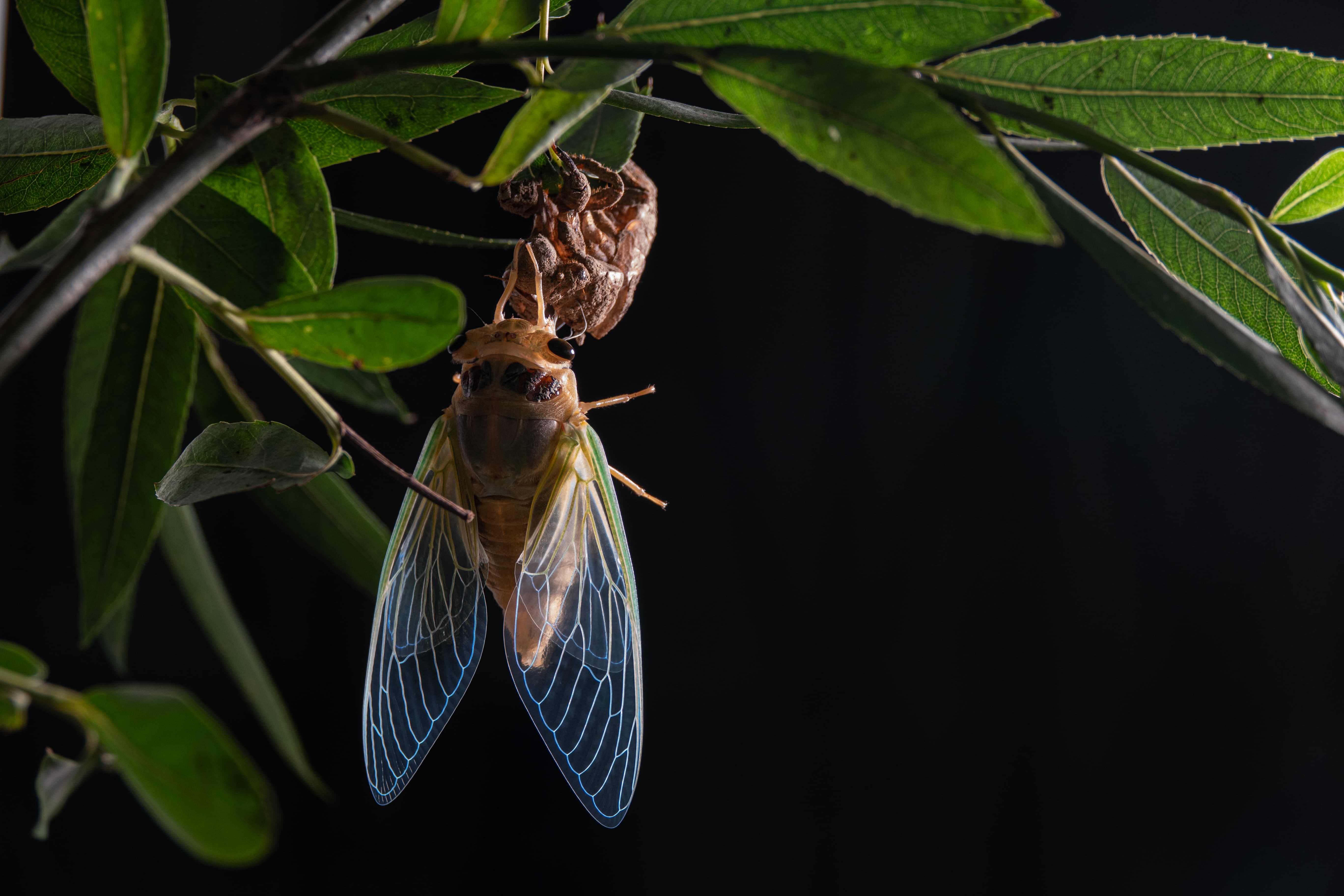
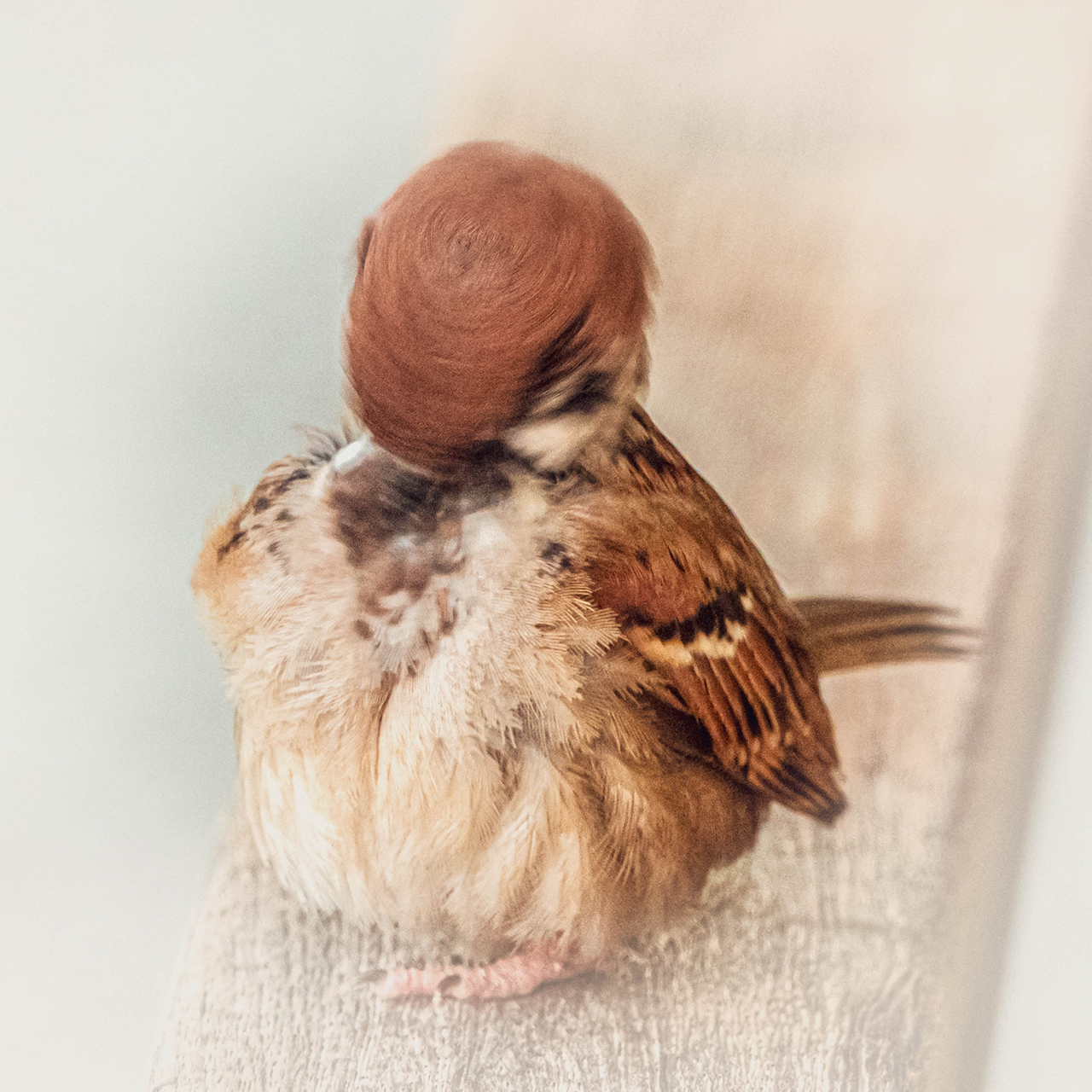
  • In free time, I love collecting seeds, ecdyses, feathers, fallen flowers and leaves, and other natural products. Some of my collections are recorded in my index (in Chinese). With limited storage space and frequent moves, I now mostly keep photographic records instead.

  • Observed wild bird species: My list (Chinese).

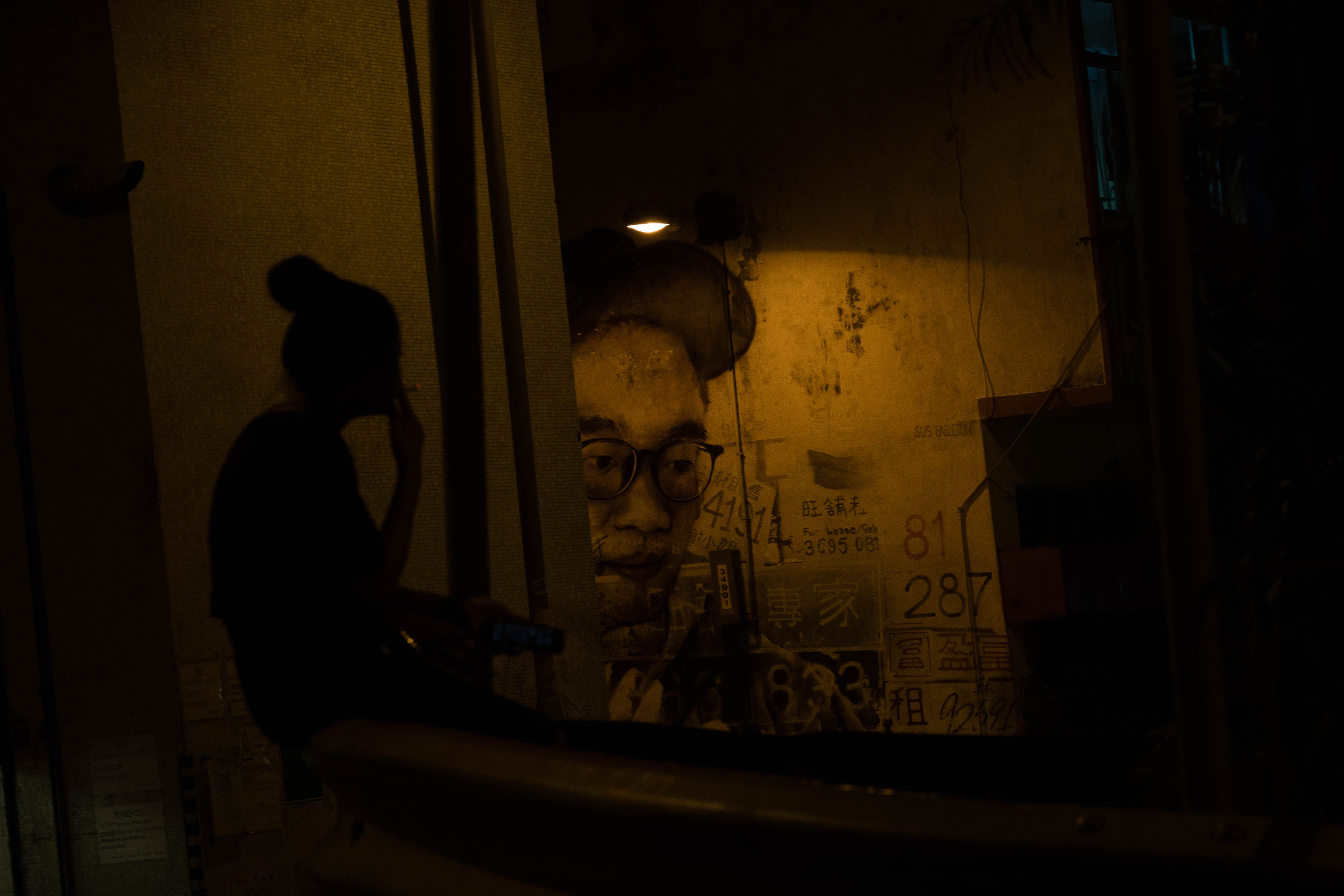
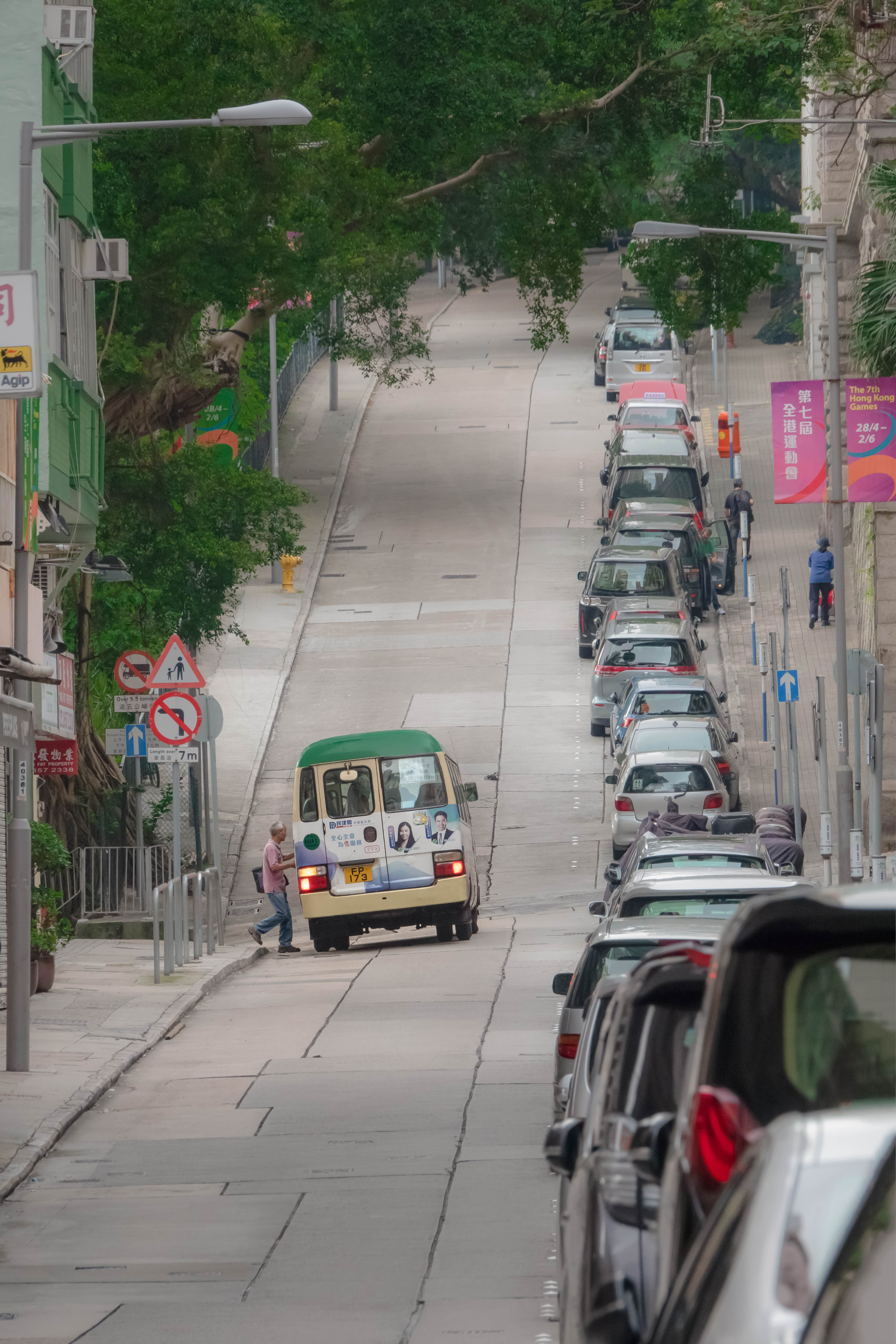
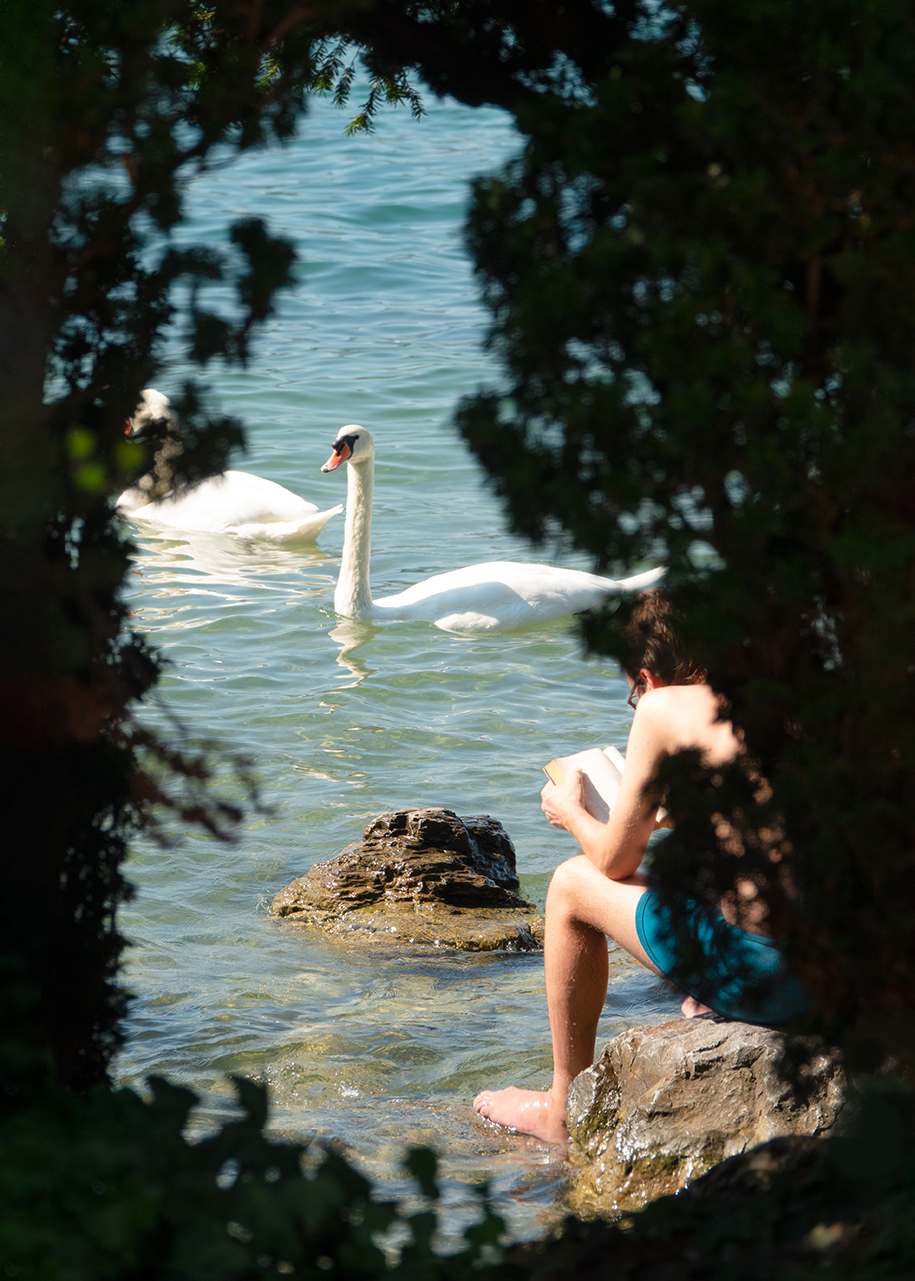
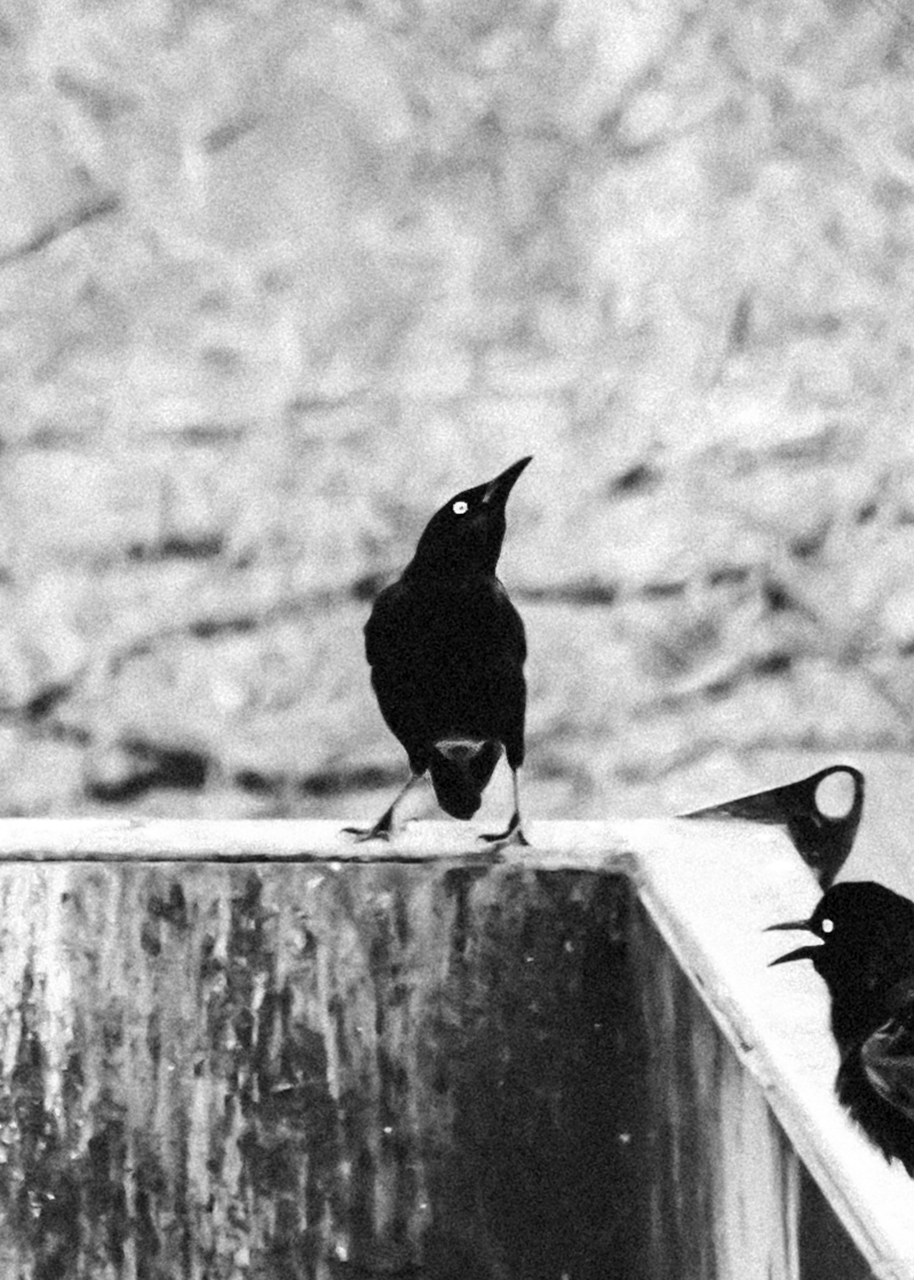
  • I also take pictures to “collet” creeping caterpillar, twinkling stars, passing strangers, and more touching moments. Here are some pictures taken by me. Welcome to browse more at 500px website :D

Contact

  • zzx0030@auburn.edu
  • Leach Science Center, Suite 2158
    380 Duncan Drive
    Physics Department
    Auburn University
    Auburn, AL 36849